

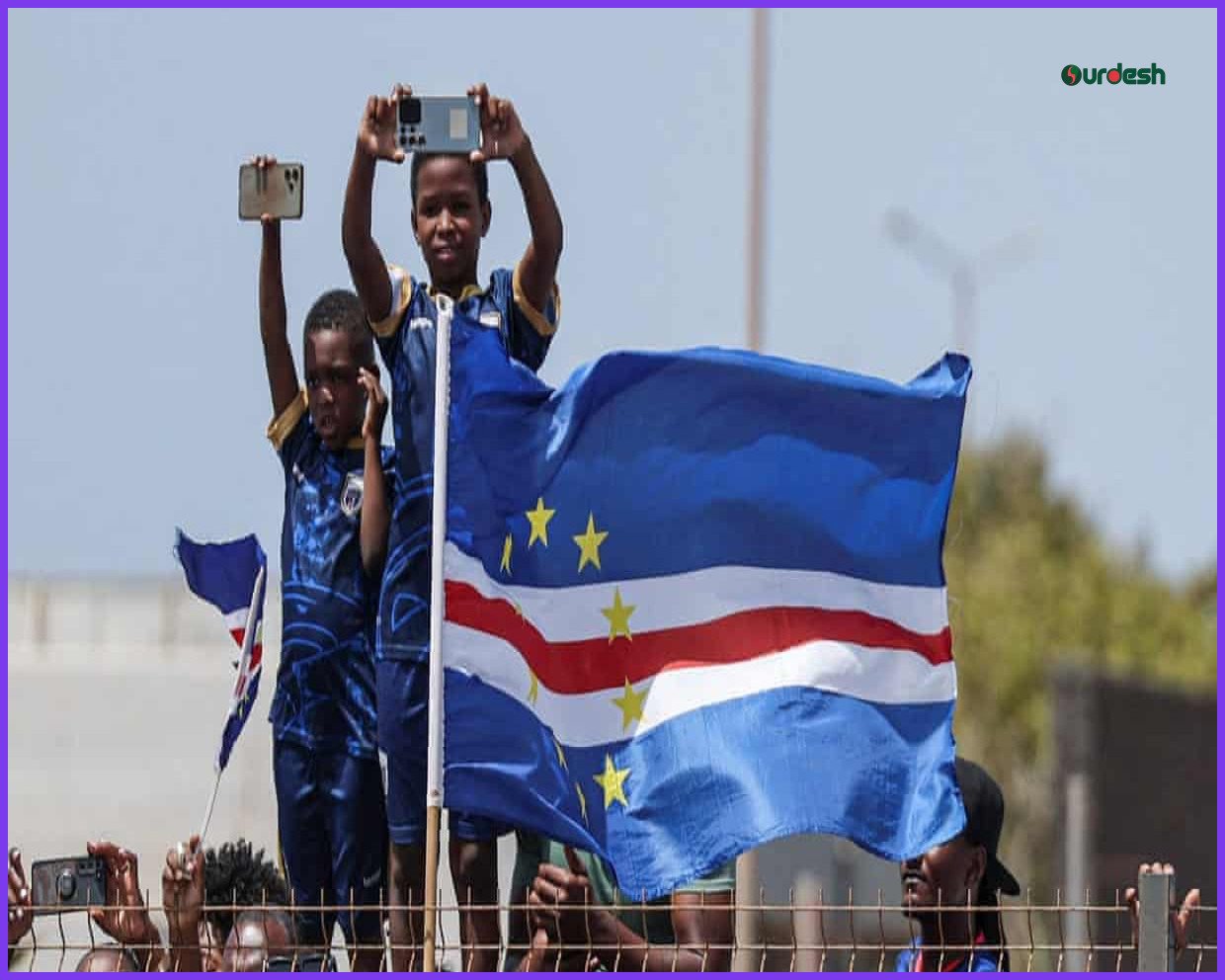
Cabo Verde emerged as a shining light for Africa during this year’s World Cup, marking a historic milestone as the smallest country to ever reach the tournament’s knockout stages. The team’s journey was deeply emotional for 56-year-old coach Bubista, who reflected on the squad’s trajectory during a pre-match press conference before their round-of-32 clash against defending champions Argentina. Although the team fought valiantly until a goal deep into extra time ultimately consigned them to defeat, Bubista emphasized the weight of their participation. He stated that while they represented their islands, they also carried the pride of the entire African continent, a sentiment that resonated with many Africans both at home and in the diaspora.
However, within the island nation itself, the relationship with continental solidarity and African identity is far more complex. António Tavares, a veteran choreographer and director of the cultural centre in the city of Mindelo, observes that some Cabo Verdeans actively identify as Portuguese rather than African. He notes that these individuals often point to their skin colour and the historical fact that the islands were uninhabited before the arrival of Europeans as proof of their origin. This perspective is deeply intertwined with the country’s history of colourism, a lingering legacy of more than 500 years of Portuguese colonial rule, during which the islands functioned as one of the world’s largest marketplaces for enslaved people.
Experts point out that the Portuguese implemented a rigid hierarchy based on labour roles and skin colour, the effects of which remain palpable today. Nardi Sousa, a professor of sociology at the University of Santiago, attributes this mentality to "Luso-Tropicalism," a philosophy popularized by Brazilian sociologist Gilberto Freyre. Freyre claimed that the Portuguese were more "humane" colonisers due to their warm climate, which supposedly made them more inclined to be friendly with enslaved people through race-mixing. At Cidade Velha, a UNESCO world heritage site on the southernmost tip of Ilha de Santiago, the largest of the nation’s 10 islands, stands a Catholic church where thousands of captured Africans were once baptised to command higher prices during the transatlantic slave trade.
Sousa describes Cidade Velha as a place with a "very bad memory," noting that it was there that Africans were dehumanized and stripped of their identities. He explains that Cabo Verde served as a laboratory for the "Latinisation of Africans," where individuals were forced to abandon their original names for Portuguese ones, such as Manuel or Jose. Tavares echoes this frustration, questioning why he carries a Portuguese name and why his own identity remains so tied to his colonisers. This historical trauma was further compounded by the dictator Salazar, who established an Auschwitz-style concentration camp in the mountainous city of Tarrafal on the other tip of Santiago. Between 1936 and 1954, and again from 1961 to 1974, the camp held detained communists from the colonies in inhumane conditions. The camp’s doctor was known for the callous remark that he was not there to cure, but to sign death certificates. Today, the site houses the Resistance Museum, which is currently seeking recognition as a UNESCO world heritage site.
As the global debate regarding reparations for the transatlantic slave trade and colonialism intensifies, the African Union has indicated that its future efforts could involve diplomatic pressure or legal actions at international courts. The Cabo Verdean culture minister, Augusto Jorge de Albuquerque Veiga, has confirmed that the country aligns with the African Union’s position. He expressed his personal support for reparations for what was stolen from the African continent, noting that the nation is currently in dialogue with all countries involved in the slave trade, particularly Portugal. However, some observers argue that Cabo Verdeans must first reconnect with their roots to meaningfully contribute to this debate. Frequent reports of Black Africans, particularly those from Nigeria and Senegal, facing profiling at Cabo Verdean airports are cited as evidence that the country has yet to fully embrace the pan-Africanist ideals of Amílcar Cabral, the leader who was pivotal to the independence of Cabo Verde and Guinea-Bissau.
Critics also point to the national curriculum, which they argue presents a tailored version of European history that fails to detail the crimes committed on African soil, leaving many students without a full sense of their African identity. Tavares argues that the country needs to "decolonise our soul" by educating people on their true history and recovering stolen memories. Meanwhile, the path toward formal recognition of these wrongs remains difficult. President José Maria Neves stated in 2023 that the reparations debate has been slowed by the rise of rightwing politics in Europe. That same year, the two nations agreed to a 12 million euro debt-for-climate swap, a move that some critics dismiss as a soft form of reparations designed to avoid using the actual term.