

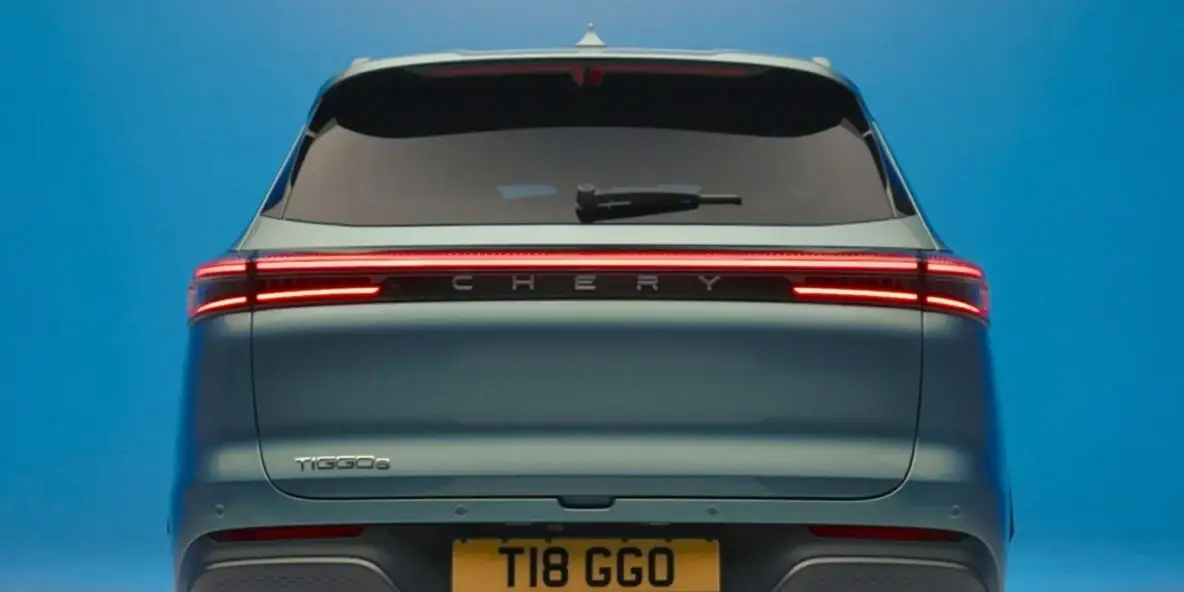
Chery announced on September 11 that it is accelerating its UK expansion, with plans to introduce four new models to the British market. Farrell Hsu, Manager of Chery UK, stated that the company has already surpassed its 2026 sales targets and is now positioning itself to compete directly with Volkswagen. The brand aims to provide what Hsu describes as “people’s cars” to the mass market.
Since launching its eponymous brand in the UK in mid-2025, Chery has secured a 2.5% market share. Its sister brand, Jaecoo, has performed even more strongly, capturing 4.3% of the market since its debut a year earlier. Combined with the Omoda and Lepas brands, the company now holds approximately 8% of the UK market—a significant jump from the 3% goal set just one year ago. Collectively, Chinese manufacturers now represent over 20% of total UK vehicle sales.
The Jaecoo 7 has been a standout performer, selling nearly 53,000 units since its late 2024 launch and becoming the UK’s top-selling vehicle in March. Often dubbed the “Temu Range Rover” for its aesthetic similarities to JLR products at a lower price point, the model has helped shift consumer perceptions. “Before, people would think about Chinese products and think we are cheap,” Hsu noted. “But now we are different because we provide better products with a little cheaper price.”
Hsu attributes the rapid adoption of Chinese brands in the UK to the lack of a domestic mass-market manufacturer. Unlike France or Germany, where national brands like Renault and Volkswagen dominate, the UK’s legacy industry is primarily focused on luxury marques such as Bentley, Rolls-Royce, Aston Martin, and Jaguar Land Rover. The absence of local brand loyalty, combined with the lack of tariffs on Chinese-made vehicles, has created a favorable environment for new entrants.
Plug-in hybrid (PHEV) technology remains the cornerstone of Chery’s strategy, with its “Super Hybrid” powertrain accounting for 75% of its sales to date. The company’s new flagship, the Tiggo X, features a five-metre, seven-seat SUV design with a PHEV powertrain that offers a 124-mile electric-only range under China’s CLTC cycle. While demand currently exceeds shipping capacity from China, the company is exploring the use of spare capacity at Nissan’s Sunderland plant, though discussions remain ongoing regarding potential compliance with EU ‘Made in Europe’ content rules.
Looking ahead, Hsu envisions a modular approach to vehicle ownership, where customers could select battery sizes and electric ranges similar to choosing storage capacity on a smartphone. Current offerings range from the Tiggo 4’s 1.8 kWh battery to the 34.4 kWh plug-in options found in the Tiggo 7, 8, and 9. To support this growth, Chery is opening an R&D centre at the UTAC Millbrook proving ground in Bedfordshire this autumn. The facility will act as a “translation centre,” allowing the brand to convert local media and customer feedback into actionable data for engineers in China. “We will test everything and then tell HQ what they need to do,” Hsu explained.
Despite its ambitions, the company remains focused on closing the quality gap with European manufacturers. Hsu acknowledged that many consumers still prefer the “German feeling” in vehicle performance. “This is something we need to learn,” he said. “Maybe in the future we can educate other markets, but currently we need to learn from them.” Having exited the Russian market, Chery now views the UK as its primary international growth opportunity. The report also notes that which launched the year before and now accounts for around 4.3%, this trails sister brand Jaecoo. The report also notes that the closest, MG, is ironically now owned by the Chinese state-owned SAIC. The report also notes that making it easier for Chinese brands to stage a market entry, this effectively means that local buyers carry no comparable loyalty to a domestic badge. The report also notes that but this figure would likely shrink under Europe’s stricter WLTP standard, the model reportedly offers 124 miles of electric-only range on China’s generous CLTC test cycle. The report also notes that describing his long-term vision, Hsu said he would like to allow buyers to choose their own battery size and electric range, in much the same way they might choose storage capacity on a new smartphone.