

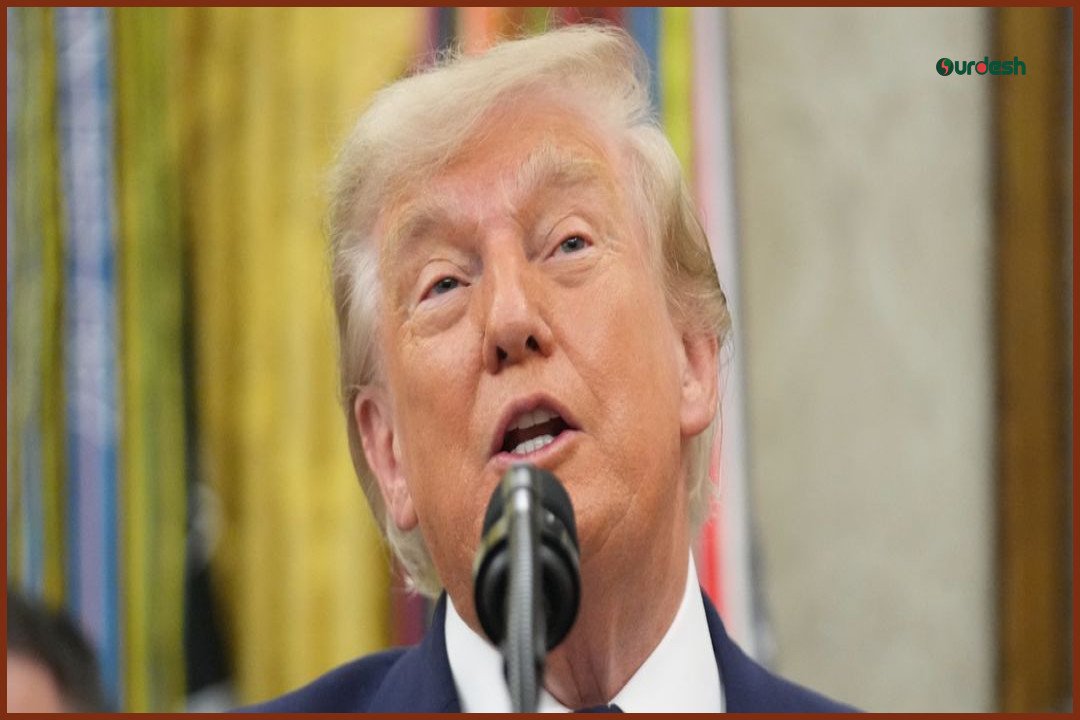
US President Donald Trump has officially announced that he will not sign a bipartisan housing bill, even as the legislation is set to become law at midnight on Friday without his signature. The President is currently leveraging the situation to pressure Senate Republicans to advance his preferred federal elections legislation, known as the SAVE America Act. In a statement posted on Truth Social, Trump declared, "I will not sign the Housing Bill, which has been fully approved by Congress and sent to the White House, in PROTEST over the fact that the United States Senate is not capable of passing THE SAVE AMERICA ACT."
The housing bill, which was formally sent to the White House by House Speaker Mike Johnson late last month, is designed to ease the national housing affordability crisis by boosting the supply of homes across the country. Under constitutional rules, the bill will automatically become law after 10 days if the president neither signs nor vetoes it. House Speaker Mike Johnson has confirmed that the bill will become law regardless of the President's actions, stating, "He won't veto the bill. We already know that. He'll either allow it to just go into law, or he'll put his signature on it and take partial ownership, and I hope he does the latter."
Trump had previously expressed indecision regarding the legislation, describing it as "so unimportant" when compared to his push for voter identification measures. A week prior to his latest announcement, he abruptly cancelled a planned White House signing ceremony for the bill, explicitly stating he would not approve it unless the Senate agreed to take up the SAVE America Act. The housing bill itself is a bipartisan effort, reflecting support from both major US parties, and aims to address the serious shortage of affordable homes.
The SAVE America Act focuses on significant changes to federal election rules. Key provisions include requiring voter identification and limiting mail-in voting to specific circumstances, such as military service, disability, illness, or travel. Supporters of the act, including many Republicans, argue that these measures are a national priority needed to protect voting integrity and reduce the risk of fraud. Conversely, critics argue that the legislation creates unnecessary barriers for eligible voters, particularly among minority and low-income groups, and maintain that existing laws are already sufficient to protect election integrity.
Currently, the SAVE America Act remains stalled in the Senate due to the filibuster and insufficient votes. On Friday, Trump renewed his call for Senate Republicans to abolish the filibuster, arguing that such a move is necessary to pass the voting measure and other Republican priorities. He further warned that Democrats would likely eliminate the rule if they regain control of the Senate. Trump is utilizing the housing bill as leverage to pressure Congress to act before the Midterms, which are now less than four months away.
Industry experts have offered their perspectives on the housing legislation as it nears enactment. Sharon Wilson Geno, president of the National Multifamily Housing Council, noted that the nation's housing-affordability challenges are at their greatest at the very low-income end of the market. She emphasized that the federal government plays a vital role and called for broader participation, stating, "We need everybody at the table. Housing costs money. We need housing in the United States. We need investors to invest in housing." Emma Waters, a senior policy analyst at the Bipartisan Policy Centre, echoed this sentiment, describing the bill as a sign of forward momentum while acknowledging that there is still more work to be done to address the housing crisis.