
Nearly a year has passed since thousands of dead fish first washed up on the shores of Lake Suchitlán, yet the cause of the ecological disaster remains unknown. Residents of the village of Copapayo, including Noel Avalos, recall the shock of discovering the massive die-off overnight, an event that marked the beginning of a sustained period of environmental distress for El Salvador’s largest freshwater body and primary hydroelectric reservoir, also known as Cerrón Grande.
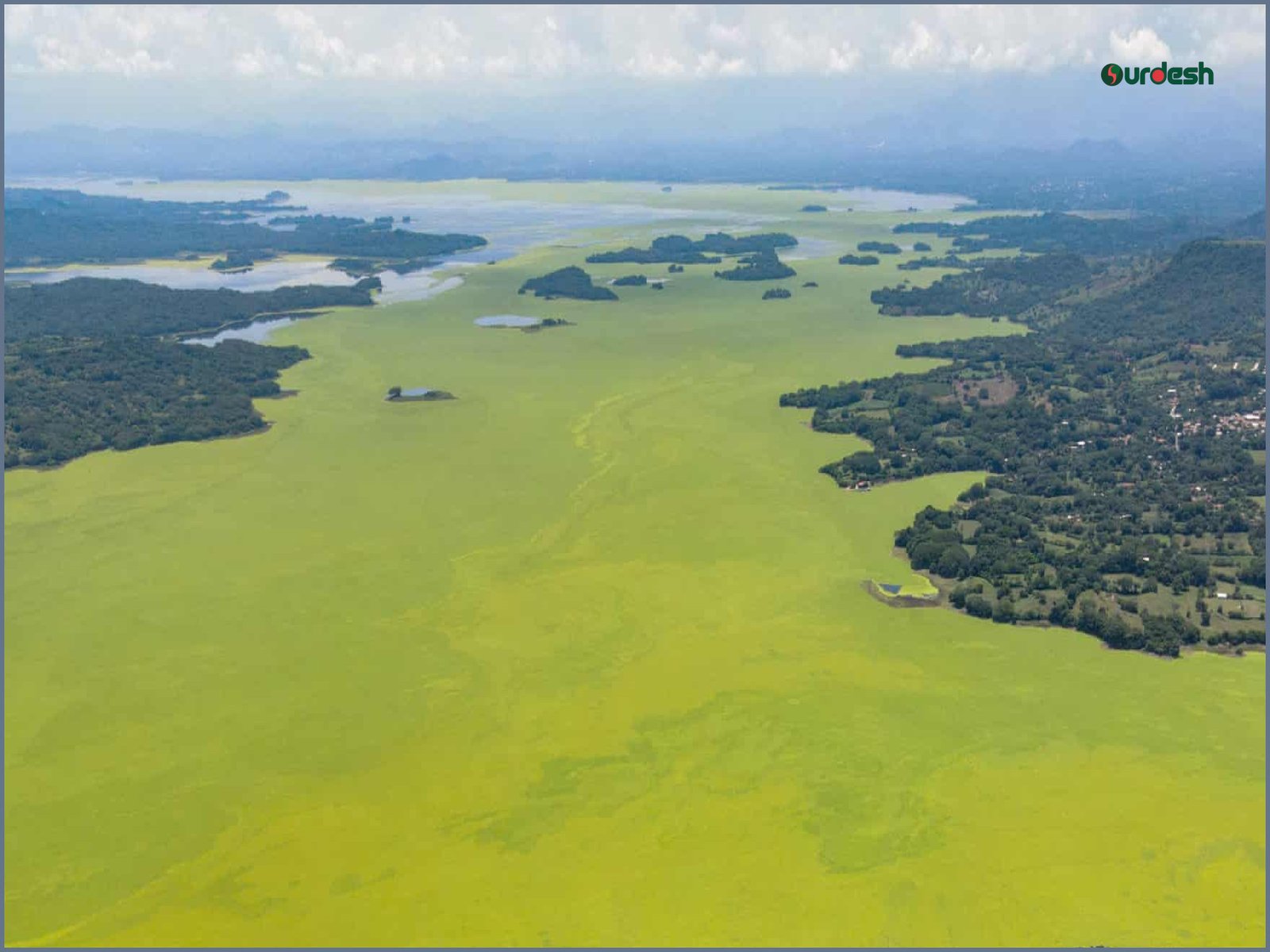
By August 2025, the situation worsened as invasive water lettuce (Pistia stratiotes) carpeted approximately 70% of the lake’s 135 sq km (33,000 acres) surface. This rapid infestation, combined with accumulating plastic waste and frequent fish deaths, devastated the livelihoods of local fishers. Many who previously earned about $15 (£11) a day were forced to rely on relatives or join clean-up crews, with the military eventually mobilized to assist in the clearing efforts. The region’s tourism sector, including boat tours and birdwatching, also suffered as the water became foul-smelling and opaque.
Alberto Castillo, a boat operator in the nearby town of Suchitoto, says the clean-up seemed impossible. He notes that while visitors are starting to return very slowly, local operators had to take different jobs during those months, earning only 30% of their previous income. Scientists and local environmental organisations had warned for years that untreated sewage, agricultural runoff and weak water-quality enforcement were pushing the lake towards collapse.
Biologist Gabriel Cerén explains that the high amount of nutrients the Lempa River receives from fertilisers, which concentrate nitrogen and sulphates, facilitated the reproduction of water lettuce. Under these conditions, the plants flourish and deplete the oxygen necessary for fish and other aquatic life. This led to a surge in mosquito numbers and persistent foul smells, marking a turning point in the ecosystem's breakdown. Lake Suchitlán is a Ramsar site and a critical habitat for 12 of El Salvador’s 14 native fish species, as well as endangered cougars and ocelots. It also feeds the Cerrón Grande dam, which provides roughly 28% of the country’s hydroelectric power.
Researchers from the University of El Salvador’s toxicology laboratory (Labtox) were asked to analyse the water through institutional channels linked to the courts, an arrangement where they provide technical support without publishing public reports. Their work focused on nitrogen and phosphorus, key indicators of eutrophication. However, they do not test for pesticides or herbicides, including paraquat, the extremely poisonous chemical widely known in the region by the trade name Gramoxone. By the time sampling occurred, weeks after the die-off, results showed no anomalies, and researchers noted that dense mats of water lettuce had made earlier monitoring impossible.
Local suspicion remains high, fueled by videos of agricultural drones flying low over the lake in the days before the die-off. While some residents suspect chemical spraying, others have speculated about the disturbance of underwater sulphur deposits. None of these theories have been confirmed, and the government under President Nayib Bukele has provided no official explanation. Despite the ongoing uncertainty, many families continue to consume fish from the lake out of necessity, with residents like Avalos noting that their bodies have had to adapt to the environment.
The crisis at Lake Suchitlán is part of a broader trend of environmental strain across Central America, where lakes like Coatepeque in El Salvador, Atitlán in Guatemala, and Yojoa in Honduras face similar threats from pollution, deforestation, and weak regulatory oversight. In June, the government-run newspaper reported a large amount of rubbish swept into the reservoir after a storm. As residents continue to navigate a lake that still faces threats from recurring waste and untreated municipal effluent, the demand for urgent, transparent study remains unaddressed. As Castillo puts it, the lake needs an urgent study because the current conditions create a perfect breeding ground for the crisis to happen again.